
Amsterdam Rental Scams (2026): 10 Red Flags + the Official Checklist Before You Pay
Rental scams cost Dutch renters €223,075 in 2024. The 10 red flags, how to verify a landlord in 10 minutes, and the exact 4 steps to take if you've been scammed.
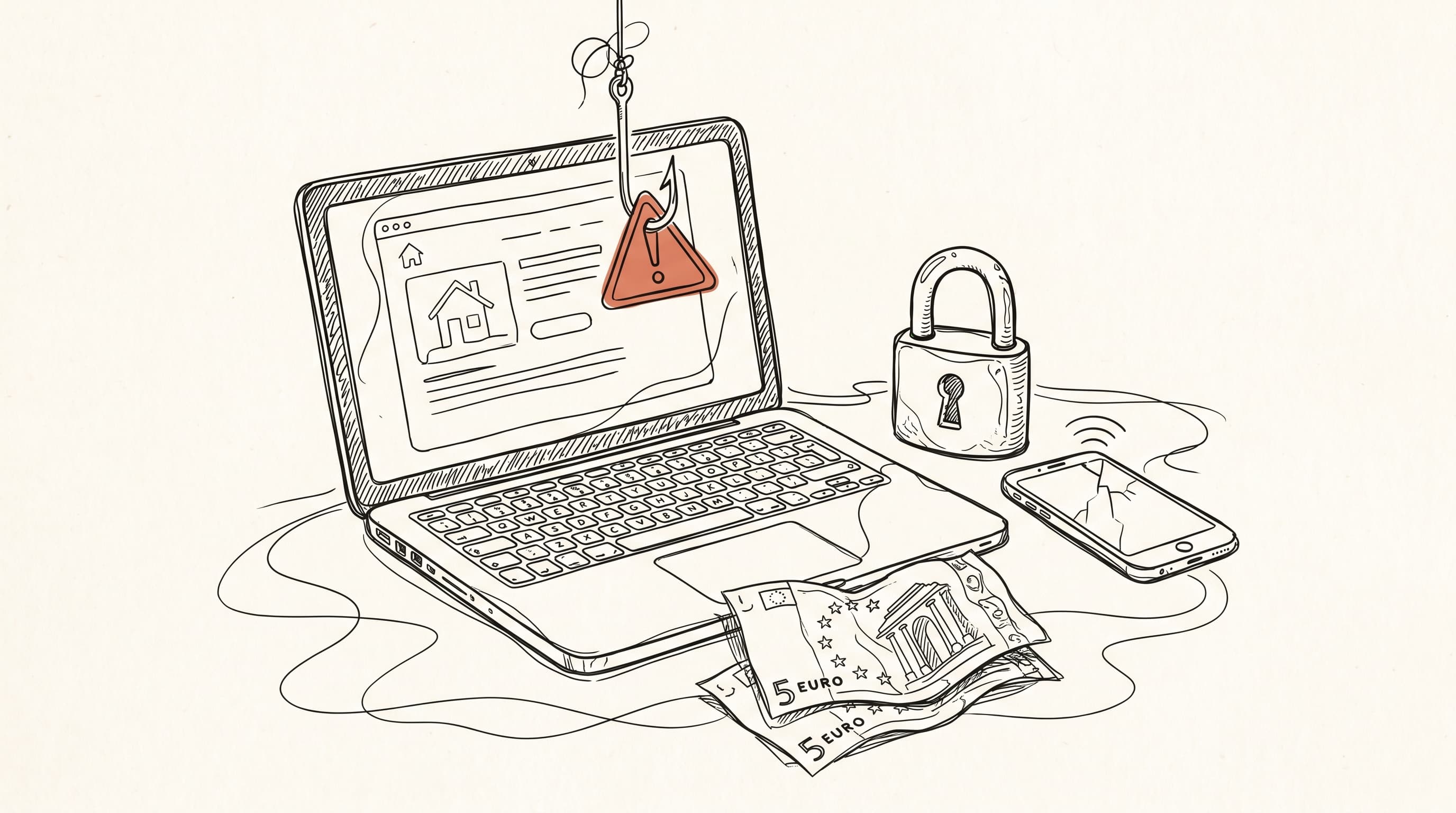
Amsterdam's housing market is so tight that desperate people make fast decisions, and scammers count on it. The good news: almost every rental scam fails against one simple rule. Here are the red flags, the way to verify a landlord in ten minutes, and what to do if it happens to you.
Key Takeaways
- The most common scam: a "landlord" abroad who asks you to pay before viewing and promises to mail the keys. They never come.
- In 2024, Dutch renters reported 244 rental-fraud cases totaling €223,075, an average near €913 per victim (Fraudehelpdesk / Woonbond, 2025).
- Never pay a cent before an in-person viewing. That one rule stops nearly all of it.
- Verify the owner on the Kadaster (€3.70); pay only by Dutch bank transfer.
- If you're scammed: bank → police → Fraudehelpdesk → gemeente. Keep every screenshot.
In ten years in this market, I've watched good, smart people lose a month's rent to a listing that never existed. It is almost never bad luck. It is a few missed warning signs.
The one that stays with me was a couple moving over from Lisbon. They had found a bright one-bedroom in De Pijp, maybe €300 under the going rate, and the "owner" was warm, fast to reply, and "in Spain for work." Everything looked legitimate: real photos, a clean contract, even a scan of a passport. He just needed the first month and the deposit by bank transfer to hold it, and he would post the keys.
They asked me to check before they paid. Two minutes on the Kadaster told the whole story. The flat was real, but the registered owner was an elderly woman with no connection to the listing. The scammer had simply lifted photos of a building he did not own. They lost nothing, because they paused for one €3.70 check. The people who get hurt are the ones who send the money first and only start asking questions when the keys never arrive.
How does the classic Amsterdam rental scam work?
The classic scam is simple: a "landlord" posts a great flat at a low price, says they are abroad (working, moving, on a mission), and asks you to pay the deposit or first month so they can "reserve" it and mail you the keys. You pay; the keys never arrive; the flat was never theirs (I amsterdam, 2025).
It works because it copies how real renting feels: photos, a contract, a friendly chat. But a real Amsterdam landlord almost never asks for money before you have seen the home and met them.
The most reported rental scam in the Netherlands is the "landlord abroad" trick: a fake owner asks for a deposit before any viewing and promises to courier the keys (Fraudehelpdesk, 2025). In 2024, 244 reported cases lost €223,075 between them, and at least half of those who reported had paid money.
The 10 red flags of a rental scam
If you see two or more of these, stop and verify before paying anything.
- You're asked to pay before viewing: deposit, "booking fee," "viewing fee," or first month.
- The landlord is "abroad" and will mail the keys or "send someone."
- The price is too good for the area, especially canal-ring bargains.
- Contact only by email, WhatsApp, or Facebook: no real address or office.
- Payment by crypto, gift cards, Western Union, or a random personal account instead of a Dutch (NL) IBAN.
- The name doesn't match the owner on the Kadaster, and they can't show written authorization.
- You're told you "can't register" (inschrijven) at the address with the municipality.
- The photos appear elsewhere online (a reverse image search finds them on another listing).
- Pressure tactics: "many people want it, pay now to secure it."
- A "viewing fee" of €100 or an "exclusivity fee" of €400 over WhatsApp to be "the only candidate" (Woonbond, 2025).
A scammer rarely shows just one flag. The "abroad" story plus an upfront payment request is the most common pair, and it is a hard stop.
How to verify a landlord in 10 minutes
Before you pay anything, run three quick official checks. Together they take about ten minutes and catch most fakes.
| Check | Where | What it tells you |
|---|---|---|
| Who owns the home | Kadaster (€3.70) | The legal owner's name; demand authorization if it doesn't match |
| Is the agency real | KVK Handelsregister (free) | Whether a rental company actually exists and who runs it |
| Is this seller flagged | Politie "Check de (ver)koper" (free) | Whether an IBAN, email, phone, or URL appears in fraud reports |
<!-- [UNIQUE INSIGHT] Most newcomers know "view before you pay" but skip the Kadaster check, which is the one that catches a scammer using real photos of a real building they don't own. -->Before paying, verify ownership on the Kadaster, where official property records cost €3.70, and check any agency on the free KvK Handelsregister (Kadaster, 2025; KVK, 2025). If the "landlord" is not the registered owner and cannot show written permission to rent the home out, treat it as a scam.
The golden rules that stop almost every scam
Four habits protect you from nearly all rental fraud. Build them into how you search, and the rest takes care of itself.
- Never pay before an in-person viewing. Real landlords don't charge to view, and don't need money to "hold" a place for a stranger. Send a trusted friend if you can't go yourself.
- Insist on a written contract. Since 1 July 2023, a written rental contract is required, and your rent and terms must be in it (Volkshuisvesting Nederland, 2023).
- Pay only by Dutch bank transfer. It is traceable. Never use crypto, gift cards, or Western Union.
- Confirm you can register at the address. If a "landlord" says you can't register with the municipality, walk away; it blocks your BSN, bank, and benefits, and is a classic scam tell.
Know your rights (so you spot illegal "fees")
Scammers often disguise illegal charges as normal ones. Dutch law is clear on two of them, so you can push back with confidence (Rijksoverheid, 2023).
- Deposit cap: at most two months' base rent for contracts from 1 July 2023 (three months on older ones). It must be returned within 14 days of the lease ending.
- No agent fee for you: if the agent works for the landlord, the landlord pays. A tenant-paid "mediation fee" (bemiddelingskosten) is illegal in that case, confirmed by the Supreme Court's Duinzigt ruling (16 October 2015), and reclaimable for up to 5 years.
The one nuance: if you hire your own search agent (a "no cure, no pay" makelaar), they can legally charge you. The ban is on the landlord's agent charging the tenant. We explain that difference in the renting in Amsterdam guide.
Where do scams hide? (and where they don't)
Most fake listings show up on Facebook groups, Marktplaats, and Kamernet, including cloned ads copied from Pararius and Funda (I amsterdam, 2025). That does not mean those platforms are useless, plenty of real homes are there too. It means the rule is verify before you pay, not "avoid Facebook entirely."
A quick trick: do a reverse image search (Google Lens) on the listing photos. If the same pictures appear on another listing or another city, the ad is stolen.
A platform-by-platform safety guide (Pararius vs Funda vs Kamernet) is coming in this series.
What to do if you've been scammed (the 4-step playbook)
Act fast and in order. The first hour matters most for getting money back.
- Tell your bank immediately. Ask them to try to recall or freeze the transfer. Speed is everything.
- File a police report (aangifte) at politie.nl, with screenshots of the ad and chats plus your bank statements. After an aangifte, the bank can release the account holder's name and address, and the suspect gets about three weeks to return the money (Politie, 2025).
- Warn others via the Fraudehelpdesk, which collects reports and gives advice.
- If a real landlord broke the rules, report to the City of Amsterdam's landlord meldpunt or get free help from !WOON.
One honest caveat: the police cannot always recover your money, and recovery depends on the scammer using a Dutch IBAN. Prevention beats recovery every time, which is why the viewing-first rule matters so much.
Don't want to gamble on a listing?
The whole reason NoRelocation exists is trust. Dossier (€200) gives you access to verified homes, often before they hit the public sites, so you are not sifting Facebook for fakes. And if you do find a listing yourself, we will help you check the landlord before you pay a cent.
Get Dossier for €200. Verified homes (often before they hit the public sites) and a person who answers at 9pm on a Tuesday.
Frequently Asked Questions
Are Facebook and Marktplaats listings always scams?
No. Real homes are listed there, but so are most fake ones and illegal sublets. The rule is the same everywhere: never pay before an in-person viewing, verify the owner on the Kadaster, and confirm you can register at the address. Treat "too cheap" listings with extra caution.
How much do people lose to rental scams in the Netherlands?
In 2024, the Fraudehelpdesk logged 244 rental-fraud reports totaling €223,075, an average near €913 per victim, and reports rose again in 2025 (Woonbond, 2025). The true figure is higher, since many victims never report.
Is it legal for an agent to charge me a finder's fee?
Only if you hired the agent yourself. If the agent works for the landlord, charging you a mediation fee is illegal under the Good Landlordship Act and the Supreme Court's Duinzigt ruling, and you can reclaim it for up to 5 years (Hoge Raad, Duinzigt ruling, 16 Oct 2015).
Can I get my money back after a scam?
Sometimes, but not always. Tell your bank within the first hour to try to freeze the transfer, then file a police report. Recovery usually depends on the scammer using a traceable Dutch IBAN. Prevention, by never paying before viewing, is far more reliable.
The bottom line
Rental scams in Amsterdam are common but beatable. The "landlord abroad" story plus an upfront payment request is the classic trap. View before you pay, verify the owner on the Kadaster, use a Dutch bank transfer, and confirm you can register at the address. Do that, and you sidestep nearly every scam in the city.
Now go in informed: read the full renting in Amsterdam guide and learn how to check your rent is legal.
Sources
- Woonbond, Honderden gemelde zaken van verhuurfraude (2024: 244 reports, €223,075), retrieved 2026-06-03, https://www.woonbond.nl/nieuws/honderden-gemelde-zaken-van-verhuurfraude/
- Fraudehelpdesk, Ik heb iets gehuurd (rental fraud), retrieved 2026-06-03, https://www.fraudehelpdesk.nl/fraude/ik-heb-iets-gehuurd/
- I amsterdam, Avoiding housing scams, retrieved 2026-06-03, https://www.iamsterdam.com/en/live-work-study/living/housing/avoiding-housing-scams
- Politie, Aangifte van oplichting + bank NAW release, retrieved 2026-06-03, https://www.politie.nl/aangifte-of-melding-doen/aangifte-van-oplichting.html
- Kadaster, Eigendomsinformatie (€3.70 owner check), retrieved 2026-06-03, https://www.kadaster.nl/producten/woning/eigendomsinformatie
- Volkshuisvesting Nederland, Wet goed verhuurderschap (voor huurders), retrieved 2026-06-03, https://www.volkshuisvestingnederland.nl/onderwerpen/huren-en-wonen/wet-goed-verhuurderschap/voor-huurders
- ACM / Woonbond, Duinzigt ruling on bemiddelingskosten (16 Oct 2015), retrieved 2026-06-03, https://www.woonbond.nl/nieuws/hoge-raad-zet-streep-praktijk-bemiddelingskosten
Luca Stradmann
Founder, NoRelocation. 10 years in Amsterdam real estate; 1,000+ tenants placed.