
Dutch Rental Contracts in 2026: 'Model A vs Model B' and the 2024 Law, Explained
Since 1 July 2024, most Dutch tenants get an indefinite contract by default. What 'Model A vs Model B' really means, the exceptions, and your rights as a tenant.
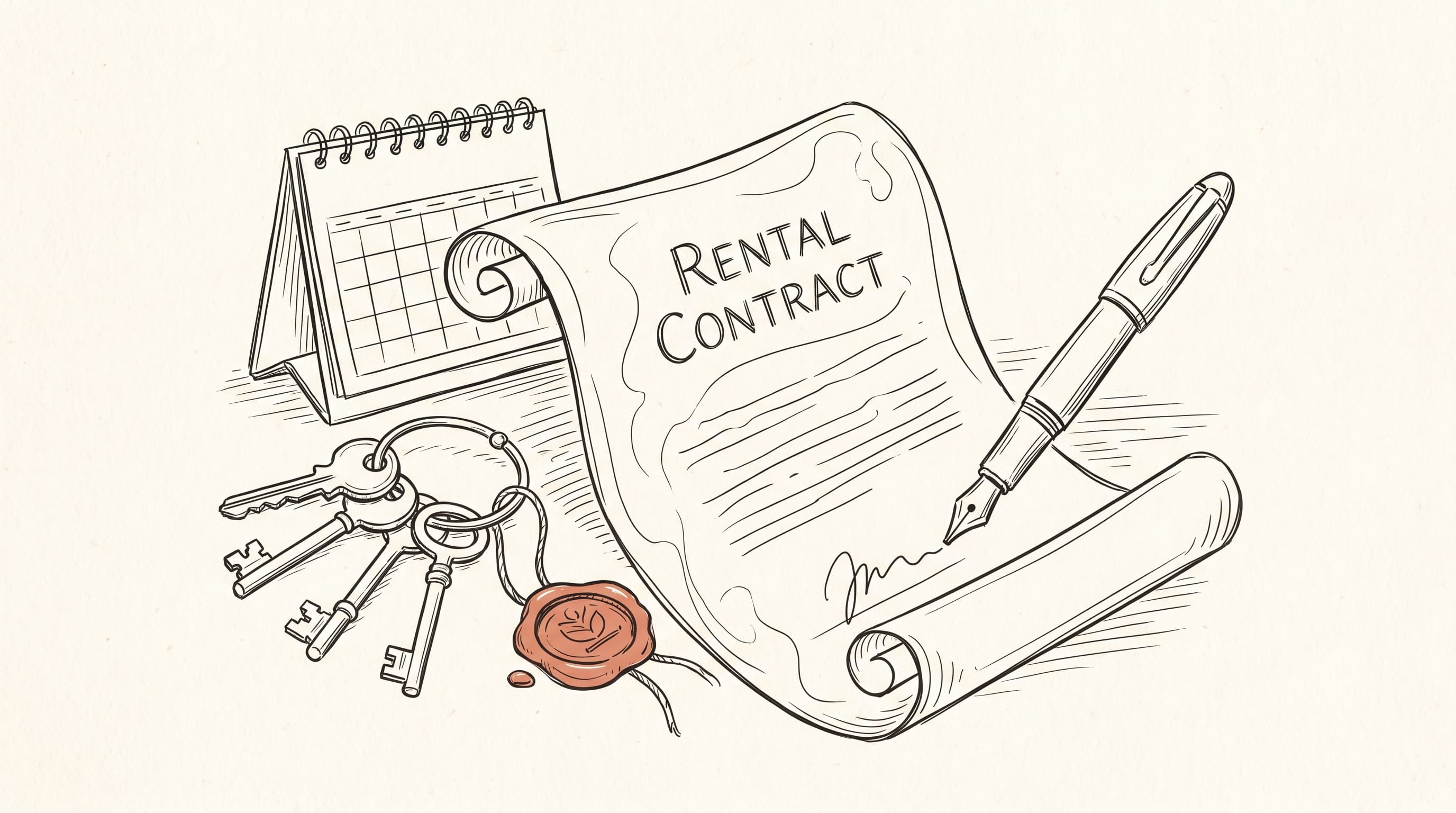
If an Amsterdam agent has mentioned "Model A" or "Model B," you have probably been confused. Here is the truth: those are nicknames, not law, and the law changed in a big way on 1 July 2024. This guide explains what contract you will actually get, and why it is mostly good news for you.
Key Takeaways
- Since 1 July 2024, the Wet vaste huurcontracten made the indefinite (permanent) contract the default again and banned most new temporary contracts (Rijksoverheid, 2024).
- "Model A" and "Model B" are not legal terms. The real split is onbepaalde tijd (indefinite) vs bepaalde tijd (fixed-term).
- As a normal tenant, you should now expect an indefinite contract with strong protection.
- Temporary contracts are allowed only for specific groups, like students renting away from home.
- A student "campus contract" is not a temporary contract; it is an indefinite contract the landlord can end only when you stop being a student.
What do "Model A" and "Model B" actually mean?
"Model A" and "Model B" are informal labels agents use, not categories in Dutch law. People generally use "Model A" for an indefinite contract (often with a minimum stay of 12 months before you can leave) and "Model B" for a temporary, fixed-term contract of up to two years. The real legal distinction is huurovereenkomst voor onbepaalde tijd (indefinite) versus voor bepaalde tijd (fixed-term).
These nicknames likely come from variations of the standard ROZ model contracts, the templates most professional Dutch landlords use (ROZ, 2024). So when an agent says "we offer Model B," ask the real question: is this contract indefinite or fixed-term, and if fixed-term, on what legal ground?
<!-- [UNIQUE INSIGHT] Newcomers read "Model A/B" as legal categories and assume they describe their rights. They do not. The rights flow from the indefinite-vs-fixed-term distinction. -->"Model A" and "Model B" are not statutory contract types in Dutch law. They are agency shorthand that loosely maps to the ROZ model agreements; the rights that actually protect you come from whether the contract is indefinite (onbepaalde tijd) or fixed-term (bepaalde tijd), not from the label.
What changed on 1 July 2024?
On 1 July 2024, the Wet vaste huurcontracten (Fixed Tenancy Contracts Act) made the indefinite contract the standard again and banned most new temporary contracts (Rijksoverheid, 2024). The government's own line: permanent contracts are "weer de norm" (the norm again).
This reversed an earlier rule. From 2016 to mid-2024, under the Wet doorstroming huurmarkt, landlords could offer a temporary contract of up to 2 years for a whole home (or up to 5 years for a room). That temporary deal became the default many newcomers were handed.
So the picture flipped:
| Before 1 July 2024 | Since 1 July 2024 | |
|---|---|---|
| Default contract | Often temporary (max 2 yrs) | Indefinite (permanent) |
| Temporary contracts | Normal, widely used | Banned, except set groups |
| Your protection | Weaker (ended on a date) | Strong (hard to evict) |
One thing that did not change: temporary contracts signed before 1 July 2024 stay valid and still end on their agreed date. The new rule applies to new contracts.
What did the old temporary contract look like?
Under the pre-2024 rules, a temporary contract had an unusual feature worth knowing if you signed one before the change: the tenant could leave early, but the landlord could not end it before the agreed date. The landlord also had to send a written notice 1 to 3 months before the end date, or the contract automatically became indefinite (Rijksoverheid, 2024).
There was also a one-time rule: a landlord could only sign one temporary contract with the same tenant. A second contract with the same person became indefinite. If you are on an older temporary contract, these details can work strongly in your favor.
When is a temporary contract still allowed in 2026?
Since 1 July 2024, a true temporary contract (max 2 years) is allowed only for a closed list of exception groups (Rijksoverheid, 2024). If you do not fit one, a temporary offer may be illegal.
The exception groups include:
- Students who rent in a different municipality for their studies
- People needing housing during an urgent renovation of their own home
- People leaving social care or in an acute housing emergency
- "Second-chance" tenants whose previous contract was ended (for example, over nuisance)
- Orphaned young people aged 16-27 taking over a deceased parent's lease
- Divorced or separated co-parents needing housing near their children
- Certain workers on the Wadden Islands, and status holders moving on from a reception centre
If you are a regular working professional and you are offered a temporary contract, ask why. A temporary contract handed to a non-exception tenant after 1 July 2024 may be invalid and can convert into an indefinite contract with full protection. Free legal help is available at Het Juridisch Loket.
What about student "campus contracts"?
A student campus contract is often misdescribed as "temporary," but it is technically an indefinite contract with a special legal end-ground. The landlord can end it only when you stop being a registered student, under Article 7:274d of the Dutch Civil Code (Woonbond, 2024).
That distinction matters. While you stay enrolled, a campus contract gives you full rent protection and the same price rules as anyone else. It does not end on a fixed date; the landlord has to give proper notice once you finish studying, and you usually have about six months to leave.
The youth contract (jongerencontract, ages 18-27) works similarly: it is indefinite, runs up to 5 years, and the landlord can end it with proper notice after that term. Both kept their place after the 2024 reform.
Why do landlords now prefer students?
Since the 2024 law tied landlords into indefinite contracts with ordinary tenants, many now favor students, because campus contracts keep a flexible exit that normal contracts no longer offer. This is a market tendency, not a legal rule, and it is acknowledged by tenant groups (Woonbond, 2025).
Be precise about the mechanism, because it is widely overstated. A landlord with a normal tenant is not "locked in" forever; they have much less flexibility to end the contract and need a legal ground (own use, non-payment, serious nuisance, or a planned sale or renovation under conditions). With a student, the campus contract gives them a cleaner exit when studies end. That difference, repeated across thousands of homes, is why some landlords steer toward student tenants.
The practical takeaway: if you are a student, you are in demand. If you are not, expect competition, and accept that the indefinite contract you are offered is actually the stronger deal.
<!-- [PERSONAL EXPERIENCE] In practice, non-student professionals sometimes feel they "lost out" on a listing to a student. The upside is that the contract they do get protects them far more than the old 2-year deal ever did. -->What are your rights on an indefinite contract?
On an indefinite contract, you can leave with about one month's notice, but the landlord can only end it on limited legal grounds. This is the heart of Dutch tenant protection (huurbescherming), and it is genuinely strong (Rijksoverheid, 2026).
What that means in practice:
- Notice to leave: usually one rental period (often one month).
- The landlord cannot just pick a date to end your lease; they need a valid ground and often court approval.
- Rent increases are capped: for 2026, the maximum is 4.4% in the free sector and 6.1% in the regulated middle segment (Rijksoverheid, 2026).
If you are unsure which segment your home is in, or whether your rent is even legal, see how to check if your rent is legal and the three housing types.
Frequently Asked Questions
Is "Model A" the indefinite contract?
People usually use "Model A" to mean an indefinite contract, often with a 12-month minimum stay, and "Model B" for a temporary one. But these are nicknames, not law. Always check whether the contract says onbepaalde tijd (indefinite) or bepaalde tijd (fixed-term), because that is what sets your rights.
I was offered a 1-year contract. Is that legal?
It depends on whether you fit an exception group (like a student renting away from home). Since 1 July 2024, a regular tenant should get an indefinite contract. A fixed-term offer to a non-exception tenant may be invalid and can convert to an indefinite contract. Get free advice from Het Juridisch Loket.
Can my landlord raise the rent whenever they want?
No. Even in the free sector, the yearly increase is capped, at 4.4% for 2026. Regulated middle-segment homes are capped at 6.1% for 2026. The landlord must also follow the notice rules in your contract (Rijksoverheid, 2026).
Does a campus contract protect me less than a normal one?
It keeps full rent-price protection (same points system, same Huurcommissie), but it has a special end-ground: the landlord can end it once you stop being a student. So you have less long-term security than a normal indefinite tenant, but more than a plain temporary contract gives.
The bottom line
Forget "Model A" and "Model B." Since 1 July 2024, the law gives most new tenants an indefinite contract with strong protection, and limits temporary contracts to specific groups. Students keep a flexible campus contract, which is why landlords favor them, but the permanent contract you are offered is the stronger one. Read the document for the words onbepaalde tijd or bepaalde tijd, and you will know exactly where you stand.
Next, make sure the rent itself is legal: read the Affordable Rent Act and how to check if your rent is legal.
Sources
- Rijksoverheid, Wet vaste huurcontracten vanaf 1 juli 2024 van kracht, retrieved 2026-06-03, https://www.rijksoverheid.nl/actueel/nieuws/2024/06/07/wet-vaste-huurcontracten-vanaf-1-juli-2024-van-kracht
- Rijksoverheid, Wanneer kan ik tijdelijk huren? (exception list), retrieved 2026-06-03, https://www.rijksoverheid.nl/onderwerpen/huurwoning-zoeken/vraag-en-antwoord/wanneer-kan-ik-tijdelijk-huren
- Rijksoverheid, Heb ik recht op huurbescherming?, retrieved 2026-06-03, https://www.rijksoverheid.nl/onderwerpen/woning-huren/vraag-en-antwoord/heb-ik-recht-op-huurbescherming
- Woonbond, Campuscontract, retrieved 2026-06-03, https://www.woonbond.nl/thema/huren-recht/campuscontract/
- Woonbond, Wet vaste huurcontracten, retrieved 2026-06-03, https://www.woonbond.nl/thema/huren-recht/wet-vaste-huurcontracten/
- ROZ, Model rental agreements for residential space, retrieved 2026-06-03, https://roz.nl/de-roz-modellen/model-woonruimte/
Luca Stradmann
Founder, NoRelocation. 10 years in Amsterdam real estate; 1,000+ tenants placed.